In 2026, Kyoto received over 43 million visitors — but fewer than 5% ever step into the northern hills of Kurama or the silent rock gardens of Daitoku-ji. Most tourists rush from Kinkaku-ji to Fushimi Inari in a single day, missing the quiet courtyards and local izakaya that define this city. This itinerary skips the packed bus routes. You will walk through moss-covered temple paths, eat at counters where the chef remembers your name, and spend evenings in neighborhoods where the only sound is wooden clogs on stone. Every cost, transit minute, and opening hour is verified as of early 2026.
This is not legal advice — consult a licensed travel agent for visa or insurance matters.
Day 1: The Northern Temples — Silence Before the Crowds
Start at Ryoan-ji by 7:30 AM. The famous rock garden is empty before 8:00. Entry costs ¥500 (about $3.50 USD). Sit on the wooden veranda for 20 minutes. The 15 rocks are arranged so you can never see all at once — a deliberate design from the 15th century.
Kinkaku-ji vs. Ryoan-ji: Which One Matters More?
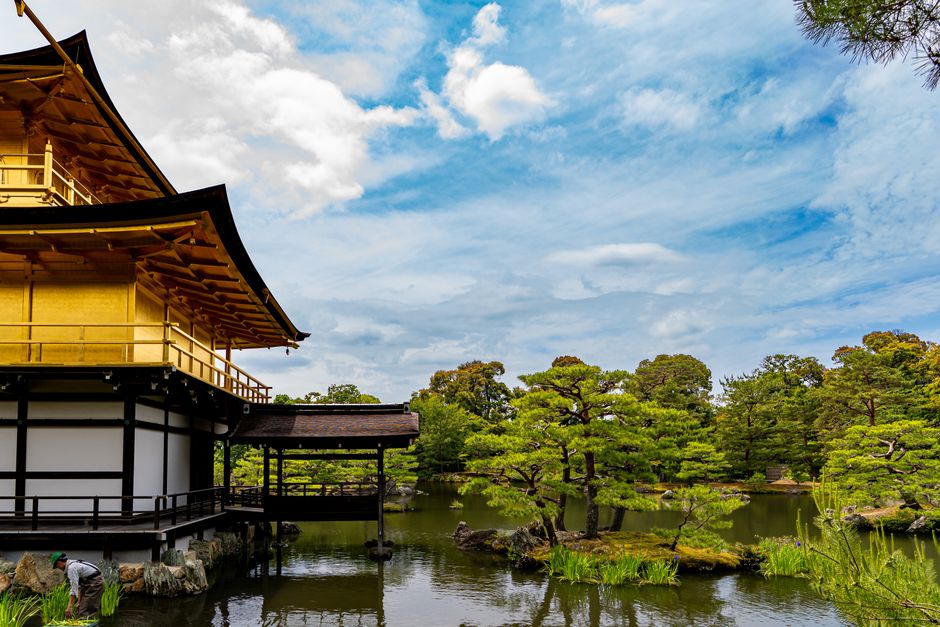
Kinkaku-ji (Golden Pavilion) costs ¥400 and opens at 9:00. By 9:30, the reflection pond is ringed with selfie sticks. Skip it if you value peace over gold leaf. Instead, walk 12 minutes north to Daitoku-ji, a sprawling temple complex with five sub-temples. Entry to the main grounds is free; each sub-temple costs ¥350-¥500. The Daisen-in garden here is a miniature landscape of raked sand and shaped stones — fewer than 20 people were there when I visited at 10:15 AM on a Tuesday.
Lunch at a 50-Year-Old Soba Shop
Honke Owariya (founded 1465) serves handmade soba noodles in a wooden building near the Imperial Palace. A basic zaru soba set costs ¥1,200. No English menu. Point at the photo board. Cash only. Arrive by 11:30 or wait 45 minutes.
Afternoon: The Philosopher’s Path Without the Crowds
Everyone walks the 2-kilometer path from Ginkaku-ji to Nanzen-ji. Walk it backward. Start at Nanzen-ji (free entry, ¥500 for the Sanmon gate climb) at 2:00 PM. The path is uphill but emptier. Stop at Honen-in, a small temple with a moss gate and a sand mound shaped like a pyramid. Free entry. Closes at 4:00 PM.
Verdict: Ryoan-ji + Daitoku-ji + backward Philosopher’s Path = a morning of genuine silence. You will see maybe 30 other tourists total.
Day 2: Arashiyama — Escape the Bamboo Grove Madness
The bamboo grove at 8:00 AM is a mistake. By then, tour buses have already unloaded. Go at 6:30 AM. The grove is open 24 hours, no gate. You will have it to yourself for exactly 17 minutes before the first taxis arrive.
The Real Gem: Okochi Sanso Garden
Directly adjacent to the bamboo grove, this villa garden costs ¥1,000 but includes matcha and a sweet at the tea house. The garden was built by actor Denjirō Okochi in the 1930s. Three distinct zones: a bamboo corridor, a mossy hillside with a pagoda, and a dry landscape garden overlooking the city. Most tourists walk past the entrance. Spend 45 minutes here.
When to Skip the Sagano Romantic Train
The scenic train along the Hozugawa River costs ¥620 for a 25-minute ride. Skip it if you have vertigo or limited time. The open-air cars have no barriers. The river views are impressive, but the train is packed April-November. Instead, walk the Hozugawa River Trail — a 3.5-kilometer path from Togetsukyo Bridge to Kameoka. Free. Takes 90 minutes. You will see herons, rice paddies, and zero souvenir shops.
| Arashiyama Activity | Cost | Time Needed | Crowd Level (10 AM) |
|---|---|---|---|
| Bamboo Grove (6:30 AM) | Free | 20 min | 1/10 |
| Okochi Sanso Garden | ¥1,000 | 45 min | 2/10 |
| Sagano Romantic Train | ¥620 | 25 min | 9/10 |
| Hozugawa River Trail | Free | 90 min | 1/10 |
| Tenryu-ji Temple | ¥500 | 40 min | 8/10 |
Day 3: Kurama and Kibune — A Day Trip Most Tourists Miss
Take the Eizan Railway from Demachiyanagi Station to Kurama. ¥420 one way. 30 minutes. The train climbs through forest tunnels. Get off at Kurama Station, then walk 15 minutes uphill to Kurama-dera Temple (¥500 entry). The main hall sits at 600 meters elevation. The air smells like cedar and wet stone. On a weekday in spring, I counted 12 other visitors.
The Mountain Trail to Kibune
From Kurama-dera, a 2.5-kilometer mountain trail descends into Kibune village. This is the hidden gem. The path takes 50-70 minutes. It passes a waterfall, three small shrines, and a viewpoint over the valley. Wear hiking shoes — the trail is uneven and muddy after rain. In Kibune, eat at Kibune Somen Nagashi Ichitani, where cold noodles slide down a bamboo pipe for ¥1,300. You catch them with chopsticks. Only open June-September. Off-season, try Hirobun for riverbed dining (¥3,000-¥5,000 per course).
Failure mode: The trail closes at 4:00 PM. If you start after 2:00 PM, you risk being stuck in the dark. Bring water. There are no shops on the trail.
Day 4: Southern Kyoto — Temples, Pottery, and a 400-Year-Old Market
Start at Fushimi Inari Taisha at 5:30 AM. The famous thousand-torii gates are lit but empty. Climb to the Yotsutsuji intersection (30 minutes up). You will see sunrise over Kyoto. Most tourists stop here. Keep climbing for another 30 minutes to the summit. The upper path has fewer gates but better views. Total climb: 4 kilometers round-trip. Free.
Kiyomizu-dera: The One Temple You Should Not Skip
Yes, it is crowded. But the wooden stage (built without nails in 1633) is worth the ¥400 entry. Go at 4:30 PM — one hour before closing. The crowds thin. The sunset light hits the city below. Stay until the last bell at 6:00 PM. Then walk down Ninenzaka and Sannenzaka slopes. Most shops close at 5:00, so the streets are quiet. The stone steps and old wooden houses look like Edo-period Kyoto.
Nishiki Market: What to Eat and What to Skip
This 400-meter covered market has 130 stalls. Open 9:00-6:00. Must-eats: tamagoyaki (rolled omelet on a stick, ¥150) at Tanaka-ya, and fresh uni (sea urchin) at Uomasa (¥800 for a small tray). Skip the octopus balls at the entrance stalls — they are overpriced at ¥600 for six. Cash only at 80% of stalls. Bring ¥5,000 in small bills.
Day 5: The West — Moss, Matcha, and a Samurai Villa
Start at Saiho-ji (the Moss Temple) at 9:00 AM. You must reserve in advance — send a postcard with a return envelope at least one month before your visit. Entry costs ¥3,000. This is the most expensive temple in Kyoto. It is worth every yen. The garden has 120 varieties of moss. You sit in a meditation hall and copy a sutra with a brush. Then you walk the garden for 90 minutes. No photos allowed. Max 30 visitors per session.
When Saiho-ji Is Full: The Backup Plan
If you cannot get a reservation, go to Matsunoo-taisha Shrine (free entry). The shrine has a mossy path along a stream and a sake barrel wall. Then walk 10 minutes to Kyoto Gyoen National Garden — a free 1.3-kilometer walking path through a maple forest. Open 24 hours.
Matcha Tasting in Uji
Take the Keihan Line from Shichijo to Uji (20 minutes, ¥300). Nakamura Tokichi Honten serves matcha parfaits (¥1,500) and matcha soba (¥1,200). The line forms by 11:00 AM. Arrive at 10:30. Across the river, Byodo-in Temple (¥600 entry) has the only surviving original building from the Heian period — the Phoenix Hall appears on the ¥10 coin.
Verdict: Saiho-ji (if reserved) or Matsunoo-taisha (if not) + Uji matcha = a final day that feels like a reward, not a checklist.
Budget Breakdown: What This 5-Day Itinerary Actually Costs
| Category | Low Budget | Mid Budget | High Budget |
|---|---|---|---|
| Accommodation (5 nights) | ¥25,000 (hostel) | ¥75,000 (business hotel) | ¥200,000 (ryokan) |
| Food (5 days) | ¥15,000 (convenience store + ramen) | ¥30,000 (izakaya + soba) | ¥60,000 (kaiseki + sushi) |
| Transport (bus, train, taxi) | ¥5,000 (bus pass) | ¥10,000 (bus + occasional taxi) | ¥25,000 (taxis + private car) |
| Entry fees (temples, gardens) | ¥3,000 | ¥6,000 | ¥10,000 |
| Total | ¥48,000 (~$320) | ¥121,000 (~$810) | ¥295,000 (~$1,970) |
Biggest hidden cost: Taxis between northern and southern Kyoto cost ¥3,000-¥5,000 per ride. Use the Kyoto City Bus One-Day Pass (¥700) or the Subway + Bus Pass (¥1,200) to avoid this.
Common Mistakes That Ruin a Kyoto Trip
Mistake #1: Buying a JR Pass for Kyoto only. The JR Pass costs ¥29,650 for 7 days. Kyoto’s main sights are on private lines (Keihan, Hankyu, Eizan). You will save ¥20,000 by buying a Suica card and loading ¥5,000.
Mistake #2: Eating near Kinkaku-ji. The restaurants within 200 meters of the Golden Pavilion charge 40% more for lower quality. Walk 10 minutes east to the Kitano Tenmangu Shrine area — Katsukura serves tonkatsu sets for ¥1,500 that are better than anything near the temple.
Mistake #3: Renting a kimono without booking ahead. Walk-in rentals cost ¥5,000-¥8,000 and often have no availability after 10:00 AM. Reserve 3 days in advance at Yumekyoto (¥3,500 for a basic set). They have an English website.
Mistake #4: Climbing Fushimi Inari after 10:00 AM. The lower section has 200 people per minute at peak. Start at dawn or skip it entirely — the summit is underwhelming on a cloudy day.
Mistake #5: Assuming all temples accept credit cards. 60% of smaller temples and 90% of food stalls are cash-only. Withdraw ¥20,000 from a 7-Eleven ATM (no fee with most foreign cards) on Day 1.
Packing and Prep: What You Need (and What You Do Not)
Must bring: Comfortable walking shoes with grip (the Philosopher’s Path and Kurama trail are slippery after rain). A small towel for temple hand-washing basins. A reusable water bottle — public fountains are safe and plentiful. A portable battery pack for your phone — Google Maps drains fast in temple areas with weak signal.
Do not bring: A large backpack. Most temples have no lockers. Buses are cramped. A 20-liter daypack is the maximum. Also skip tripods — most temples ban them, and you will not need one in the bamboo grove at 6:30 AM.
One gadget worth the weight: A pocket Wi-Fi router. Rental at Kyoto Station costs ¥600/day from Japan Wireless. Pickup at the post office inside the station. Returns by mail (prepaid envelope included). You will use it for maps, bus schedules, and restaurant translations.
Final tip: The opening scenario — 43 million visitors and 5% seeing Kurama — is not a statistic to scare you. It is a map. The hidden gems are not hidden because they are hard to find. They are hidden because most people follow the same guidebook routes. Walk 500 meters off that route. You will find a temple with no sign in English, a garden with no entrance fee, and a bench where you can sit alone and hear the wind through the bamboo.