Phase 1: The Prep (Crucial for Success)
Anatomy & Selection: Know Your Eye Shape
Before applying false eyelashes, understand your eye shape to pick styles that enhance your natural beauty. Different shapes need different lash styles:
- Almond Eyes: Most lash styles work well; try flared or wispy lashes for a natural lift.
- Hooded Eyes: Choose lashes with a slight curl and medium length to avoid hiding under the crease.
- Monolid Eyes: Go for lashes with volume and upward curl to open up the eyes.
- Deep-set Eyes: Longer, fuller lashes push the eyes forward and add softness.
Lash bands play a major role in comfort and style:
- Clear Bands: Perfect for beginners or those after a natural, invisible look. They blend seamlessly with your natural lash line.
- Thick Black Bands: Ideal for drama and liner integration, these help create a bold, defined eye but require more precision.
The Toolkit: Gather Essential Gear
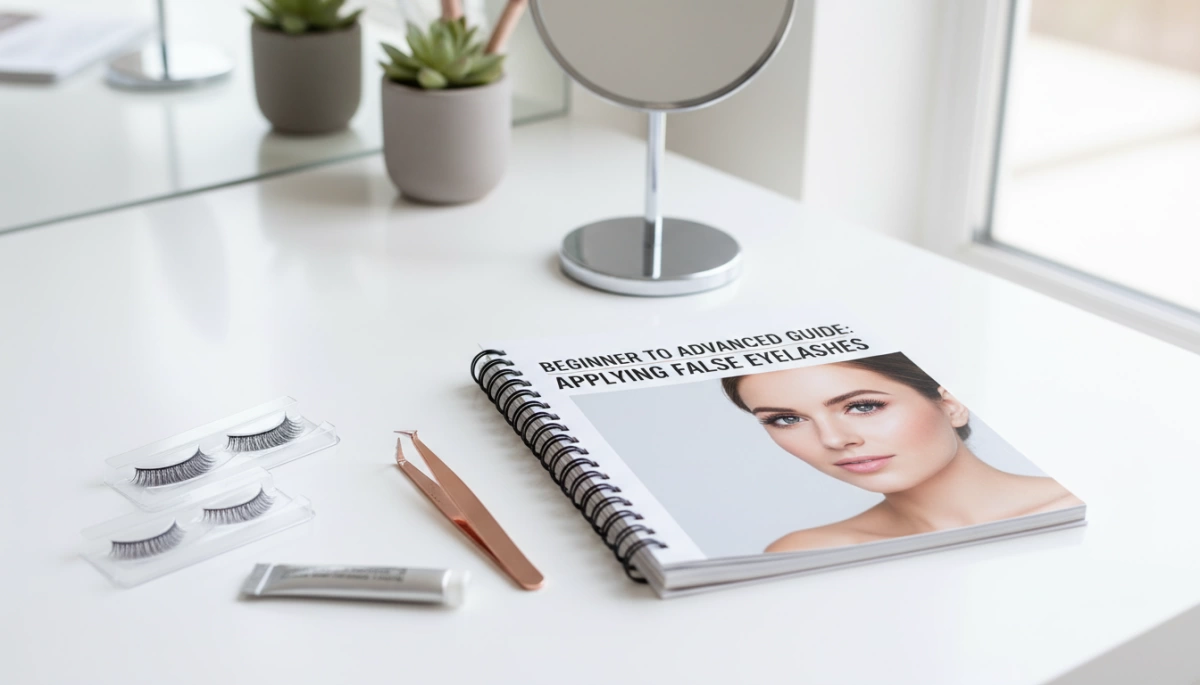
Success starts with the right tools. Here’s your must-have kit for smooth application:
- Precision Tweezers or Lash Applicator Tool: For accurate placement and better control.
- High-Quality Lash Adhesive: Choose between clear glue (for a natural finish) or dark adhesive (for liner-like effect). For sensitive eyes, opt for latex-free eyelash glue.
- Small Scissors: Trim false lashes to fit your eye shape and size perfectly.
- Handheld Mirror: Position it for the best angle—focus on bringing your upper lash line into clear view without squinting.
Preparing your lashes carefully with the right selection and tools sets the stage for flawless application and long-lasting wear.
Phase 2: The Beginner’s Application (Strip Lashes)
Sizing the Band
Start by measuring your false lashes against your natural lash line. Always measure from the inner corner outward—this ensures the lash fits your eye shape perfectly. Remember, bands that are too long can cause lifting and discomfort.
The Cut: Trim from the Outer Edge
To keep the lash style intact, trim only from the outer edge. Cutting from the inner corner can ruin the natural taper and curve, so always maintain the original shape for the best look.
Adhesive Mastery
Apply a thin, even layer of lash adhesive along the band. Don’t forget to place an extra dot on the ends—this is crucial to prevent lifting, especially at the corners. Using a latex-free eyelash glue is a safer option to avoid irritation.
The Wait: The 30-45 Second Rule
Patience pays off. Wait 30 to 45 seconds for the adhesive to get tacky before applying. This drying time is the #1 secret to successful lash bonding and keeps the strip lashes from sliding around.
The Looking Down Technique
Position your mirror below chin level so you can look down into it without closing your eyes. This exposes your upper lash line fully and makes application easier and more precise.
Placement & Bonding
Start by placing the lash strip in the center of your lash line. Then secure the outer corner, followed by the inner corner. Pinch your natural lashes with the false ones to blend them seamlessly—this step makes all the difference between obvious and natural-looking lashes.
For more tips on lash adhesive drying time and expert application, check out this detailed guide on how layering products transforms your beauty routine.
Phase 3: Advanced Techniques (Leveling Up)
Ready to take your false eyelash game to the next level? Advanced methods like the cut-up method, individual and cluster lashes, and double stacking can give you a stunning, customized look.
The Cut-Up Method
Instead of struggling with one long strip, cut your full strip lashes into three smaller sections. This makes application easier and allows a custom fit tailored to your eye shape. It’s a simple way to control placement and prevent the band from lifting.
Individual & Cluster Lashes
For a more natural or wispy hybrid style, use individual or cluster lashes. Map your eye by putting longer lashes on the outer corners and shorter ones toward the center. This technique enhances your eye shape by adding depth and volume where it counts.
Under-Lash Application (The Invisible Method)
Apply small lash clusters underneath your natural lashes instead of on top. This invisible lash band technique creates fullness without any visible strip, perfect if you want a subtle boost. Just be cautious if you have sensitive waterlines—double-check your adhesive is safe and avoid contact with the eye itself.
Double Stacking
Want drama? Layer two different strip lashes to create a bold 3D effect. Double-stacking adds volume and dimension, especially great for special occasions or evening looks.
By mastering these advanced techniques, you can customize your false lashes for any occasion. For more tips on blending and styling, check out
Troubleshooting Common Failures with False Eyelashes
Even with practice, false lashes can sometimes misbehave. Here’s how to fix the most common issues:
Inner Corner Lift
This usually happens when you use too much lash adhesive or the band is too long for your eye shape. Glue that’s wet can also repel the lashes, causing them to peel away. To fix it instantly: gently press the inner corner down with your tweezers or lash applicator tool. If the band is too long, trim a bit more off the outer edge next time to ensure a snug fit.
Heavy Feeling on Eyelids
If your lashes feel heavy or uncomfortable, the problem is often the angle of application. Try adjusting how you place the strip—tilt it slightly so it aligns naturally with your lash line. Using lighter strip lashes or individual flares can also help reduce weight.
Visible Glue on the Lid
Glue can sometimes show through, especially with dark bands or if the adhesive spreads onto your skin. Fix this by gently applying a matte black shadow or liquid liner over the lash band. This also helps blend the band into your natural lash line for a seamless look.
These quick fixes will help you avoid frustration and keep your lash game flawless. For more tips on makeup techniques and affordable product options, check out this helpful guide on affordable dupes for luxe eye shadow shades.
Maintenance and Safety: Lash Removal and Care
Proper maintenance is key to keeping your false eyelashes safe and reusable. When it’s time to remove, avoid pulling dry lashes—this can damage both your natural lashes and the falsies. Instead, dissolve the bond using an oil-based remover or micellar water, gently loosening the adhesive before lifting them off.
For cleaning reusable lashes, carefully remove old glue from the band with precision tweezers. This step is essential to maintain the lash shape and ensure smooth application next time. Afterward, sanitize the lashes with alcohol to prevent eye infections and keep them hygienic.
When storing, always keep your lashes on the original tray to maintain their natural curve and avoid deformation. This simple storage step preserves the band’s shape, making the next application seamless and comfortable.
By following these safe lash removal and cleaning techniques, you extend the life of your lashes while protecting your eyes with proper hygiene.