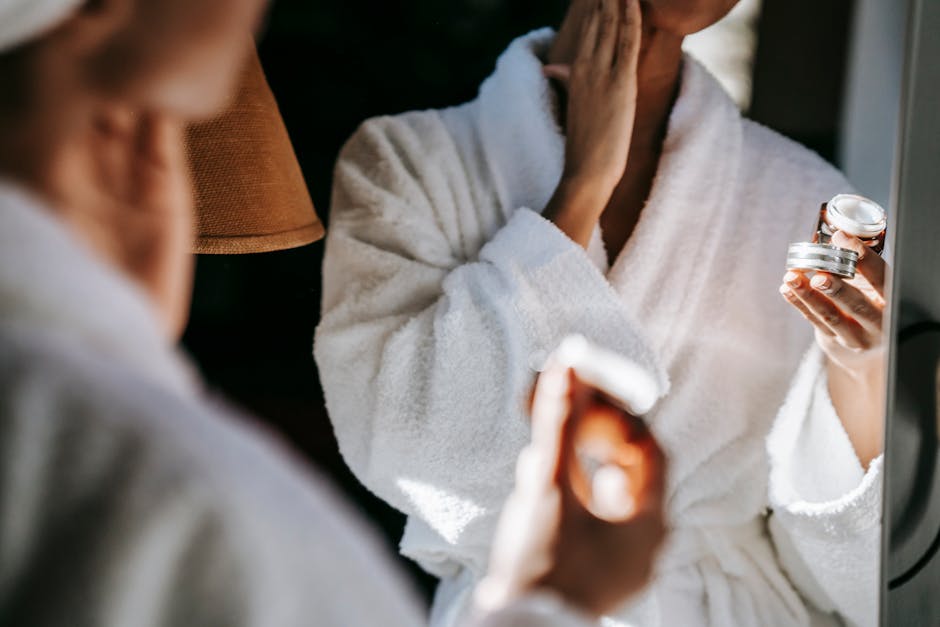
What actually belongs in a minimalist anti-aging skin kit? Most brand bundles answer that with eight to twelve products. The research answers it with four.
The anti-aging skincare market is built on complexity. A $200 kit with ten products feels more serious than a $40 kit with three — but that is marketing logic, not skin science. A small number of well-studied ingredients, applied consistently, outperform expensive multi-product systems in almost every clinical comparison. The obstacle is not finding the magic product. It is cutting through the ones that exist to fill out a so-called complete routine.
This guide names specific products, real prices, and the reasoning behind every recommendation. Nothing abstract.
Why Anti-Aging Routines Keep Growing (And Why That Works Against You)
The skincare industry is not designed to sell you one product. It is designed to sell you the next one. Once you have a moisturizer, there is a booster that makes it work better. Once you have a serum, there is a mist that improves absorption. This is not cynicism — it is how product lines get structured and marketed.
There is also a more personal problem that rarely gets named: when you start three new products in the same week and see improvement a month later, you assume all three are helping. In reality, one is probably doing 90% of the work. The other two are expensive bystanders. You will never know which is which unless you introduce them one at a time.
The Three Ingredients With Strong Clinical Evidence
When you strip away the marketing vocabulary — youth-activating complex, bio-regenerative peptides, reverse-time technology — dermatology research keeps returning to the same short list of genuinely effective actives:
Retinoids are the most clinically documented anti-aging ingredient in the field. Vitamin A derivatives — retinol, retinaldehyde, tretinoin — increase cell turnover, stimulate collagen synthesis, and reduce hyperpigmentation over time. A 2007 study in the Archives of Dermatology showed measurable improvement in fine lines and elasticity after 24 weeks of consistent use at 0.4% retinol. No serum brand, no peptide complex, no lifting concentrate has that level of controlled evidence behind it.
Broad-spectrum SPF is the most impactful anti-aging step available — by a margin that is not close. UV damage causes roughly 80% of visible facial aging. Every active ingredient you apply at night is competing against photoaging you accumulate during the day. Skipping sunscreen while using retinol is like patching a leak while the faucet is still running.
A ceramide-based barrier moisturizer keeps the skin’s protective layer intact. A compromised barrier accelerates water loss, makes skin look dull and crepey, and reduces how effectively every other active performs. It does not produce dramatic visible results on its own — but without it, everything else in the routine underperforms.
The reason minimalist routines outperform complex ones over time is largely behavioral. A four-product routine you do every day for two years produces better outcomes than a twelve-product routine you do three times a week because the full process felt like too much effort. Retinol takes months of consistent use before measurable changes occur. Consistency beats sophistication, every time.
What Eye Creams, Serums, and Sheet Masks Are Really Doing
Eye creams are mostly moisturizers sold in smaller jars at two to four times the cost per ounce. The skin around the eye does not have a unique cellular structure requiring a completely different formula. If your regular moisturizer does not sting and does not migrate into your eyes, it works fine in that area. The delicate eye area framing is a retail category, not a medical classification.
Serums are more nuanced. A well-formulated vitamin C serum — L-ascorbic acid at 10 to 20% — adds real antioxidant protection and can gradually brighten hyperpigmentation. A peptide serum may support collagen over time. But most serums are expensive delivery systems for low concentrations of ingredients already present at higher doses in better-tested, cheaper products. Before adding any serum, check the active ingredient, the concentration, and whether another product in your routine already covers it.
Sheet masks provide temporary hydration. Skin looks plumper for a few hours because it has been sitting in humectants. There is no lasting anti-aging effect from occasional masking. Enjoy them if you like them — just do not count them as part of a serious routine.
Simplicity also wins on compliance. A four-product routine takes three minutes morning and night. A ten-product routine takes fifteen. The steps that get skipped when you are tired or traveling are almost always SPF and retinol — the only two that actually move the needle over years of use.
The Minimalist Anti-Aging Kit: What to Buy at Every Budget
Each role below needs exactly one product. The table covers the most accessible options at two price points, with the active ingredient that justifies the purchase.
| Role | Budget Pick | Mid-Range Pick | Price Range | Key Active |
|---|---|---|---|---|
| Cleanser | CeraVe Hydrating Cleanser | La Roche-Posay Toleriane Hydrating Gentle Cleanser | $12–$18 | Ceramides, glycerin |
| Retinoid (night) | The Ordinary Retinol 0.2% in Squalane | RoC Retinol Correxion Deep Wrinkle Serum | $7–$25 | Retinol 0.2% to 1% |
| Moisturizer | CeraVe Moisturizing Cream | Olay Regenerist Micro-Sculpting Cream | $17–$30 | Ceramides / niacinamide + peptides |
| Sunscreen (morning) | EltaMD UV Clear Broad-Spectrum SPF 46 | La Roche-Posay Anthelios Mineral SPF 50 | $35–$40 | Zinc oxide |
The cleanser matters least. It is on your face for 30 seconds. CeraVe Hydrating Cleanser at $12 performs identically to cleansers costing four times as much — its only job is not stripping your barrier, which it does reliably. Save the extra budget for sunscreen, which you will go through much faster.
The Ordinary Retinol 0.2% in Squalane at $7 is one of the more thoughtfully formulated entry-level retinoids available. The squalane base significantly reduces dryness and flaking — the main reasons people abandon retinol before it has a chance to work. Low concentration is not a weakness for new users; it is the correct starting point.
Olay Regenerist Micro-Sculpting Cream at $30 earns its spot. The niacinamide and amino acid peptide combination makes it one of the few drugstore moisturizers where the actives are present at concentrations that actually do something, not just amounts added to justify label claims.
For sunscreen, EltaMD UV Clear SPF 46 consistently tops dermatologist recommendations for daily use. No white cast, wears cleanly under makeup, and the added niacinamide doubles its function. La Roche-Posay Anthelios Mineral SPF 50 is equally effective and more widely available through major international retailers.
The One Shortcut That Cancels Out Everything Else
Using retinol at night and skipping SPF in the morning.
Retinoids increase photosensitivity and accelerate shedding of the outermost skin layer. UV exposure drives the same collagen breakdown retinol is working to reverse. Without daily sunscreen, no retinoid — OTC or prescription — delivers its full benefit. If you take one thing from this guide, use these two steps together: retinol every night, SPF every morning without exception.
How to Start Retinol Without Wrecking Your Skin
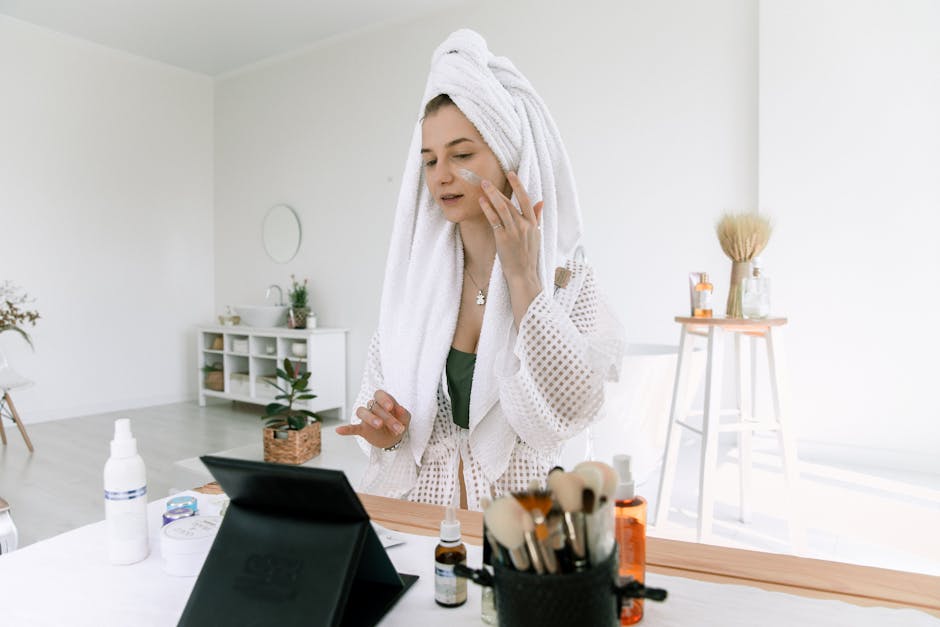
Retinol has a documented dropout problem. More than half of people who start using it quit within the first month — usually because of dryness, flaking, or redness that gets misread as a reaction. It is almost never an allergy. It is a predictable adjustment phase, and starting correctly determines whether you push through it or give up for good.
Concentration: What the Numbers Actually Mean
OTC retinol runs from 0.025% to 1%. Prescription tretinoin starts at 0.025% but is a different molecule — it does not need to be converted before becoming active in skin cells, which makes it noticeably stronger than the same percentage of OTC retinol.
For a first retinoid, start between 0.025% and 0.2%. Use it two nights per week for the first month, then build to three nights, then every other night, then nightly as your skin tolerates it. Jumping to nightly use in week one is the most common mistake. The resulting irritation forces a break, and then you are restarting the adjustment window from scratch. Slow introduction is faster in the long run.
Do not layer retinol with AHA or BHA exfoliants on the same night. Use them on alternating nights. Combining actives at full strength on the same evening is how people end up with barrier damage and no idea which product caused it.
The Ordinary vs. Neutrogena vs. RoC — Which to Buy
- The Ordinary Retinol 0.2% in Squalane ($7): Best first retinoid. Lowest OTC concentration, squalane base cushions the initial adjustment significantly. Correct choice for first-time users and sensitive skin types. Not the fastest path to visible results, but the most survivable starting point.
- Neutrogena Rapid Wrinkle Repair Retinol Serum ($25): 0.3% retinol with hyaluronic acid. Good step-up product after six to eight weeks at 0.2%. Absorbs cleanly, minimal scent, available at most drugstores and major retailers.
- RoC Retinol Correxion Deep Wrinkle Serum ($25): 1% retinol — the ceiling for OTC products. Silicone-forward formula reduces flaking but feels noticeably heavier on skin. For experienced retinol users only. This is not a starting product.
Clear progression: The Ordinary first, Neutrogena after tolerating 0.2% well for six to eight weeks, RoC only once you have built genuine tolerance. Do not skip early steps to get to the stronger product faster.
The Buffer Method: How to Cut Irritation During Adjustment
Apply moisturizer first. Wait five minutes. Then apply retinol on top. The moisturizer layer slows absorption and reduces initial dryness and flaking without meaningfully cutting long-term efficacy. As your skin adjusts — usually by month two or three — reverse the order: retinol directly on cleansed skin, moisturizer after. Most people who use the buffer method consistently find they no longer need it within three months, because the skin has adapted.
When Four Products Is Not the Right Answer
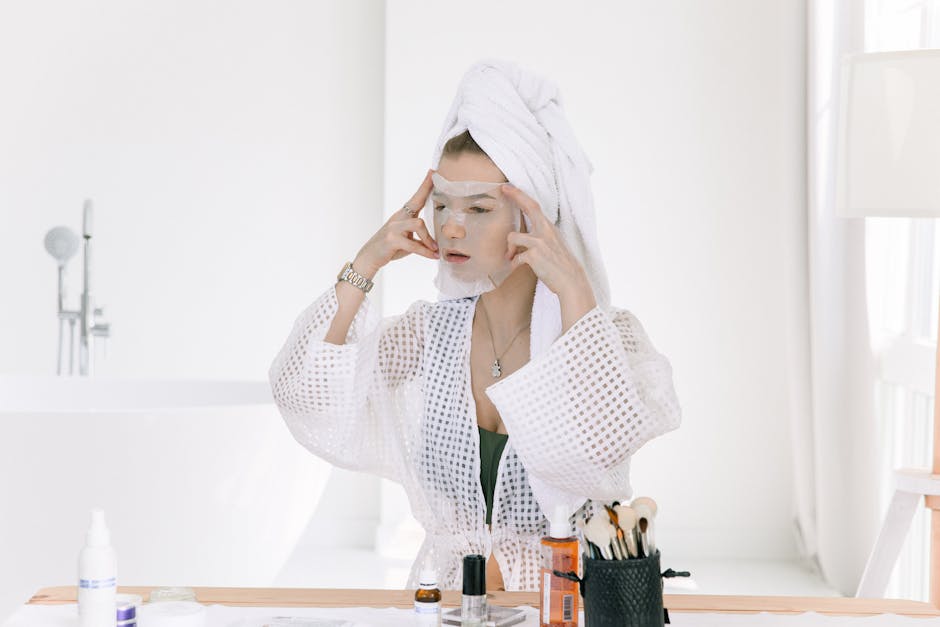
The minimalist kit handles early to moderate skin aging well: fine lines, mild texture changes, general sun protection, and daily maintenance. But there are specific situations where it falls short, and simply adding more products to the shelf is not always the fix.
- Deep lines or significant elasticity loss: OTC retinol has a ceiling, and substantial visible aging often requires prescription-strength tretinoin. Telehealth services like Curology or Apostrophe provide prescriptions for around $20 to $30 per month. If you have been consistent with 0.5 to 1% OTC retinol for six months and see minimal change, a prescription is the logical next step — not a more expensive OTC serum.
- Hyperpigmentation or melasma as the main concern: This four-product kit addresses fine lines and texture, not dark spots. Add a vitamin C serum with L-ascorbic acid at 10 to 20%, applied in the morning before SPF. TruSkin Vitamin C Serum at $20 (20% L-ascorbic acid) is accessible and stable enough for daily use. Skinceuticals C E Ferulic at $182 is the benchmarked gold standard — the formulation stability and ferulic acid synergy are clinically superior. For anyone who has tried cheaper vitamin C serums without results, that price difference is often worth paying.
- Compromised skin barrier: If your skin is currently red, reactive, or constantly tight from over-exfoliation or harsh previous treatments, introducing retinol now will make it worse. Spend four to six weeks using only a gentle cleanser and CeraVe Moisturizing Cream — no actives at all — before restarting with any retinoid.
- Stopping at the jawline: The neck and décolletage age at the same rate as the face and respond to the same ingredients. Apply retinol and SPF to these areas using the same routine. Use a lower concentration on the neck for the first month — the skin is thinner and reacts more quickly to retinoids than facial skin does.