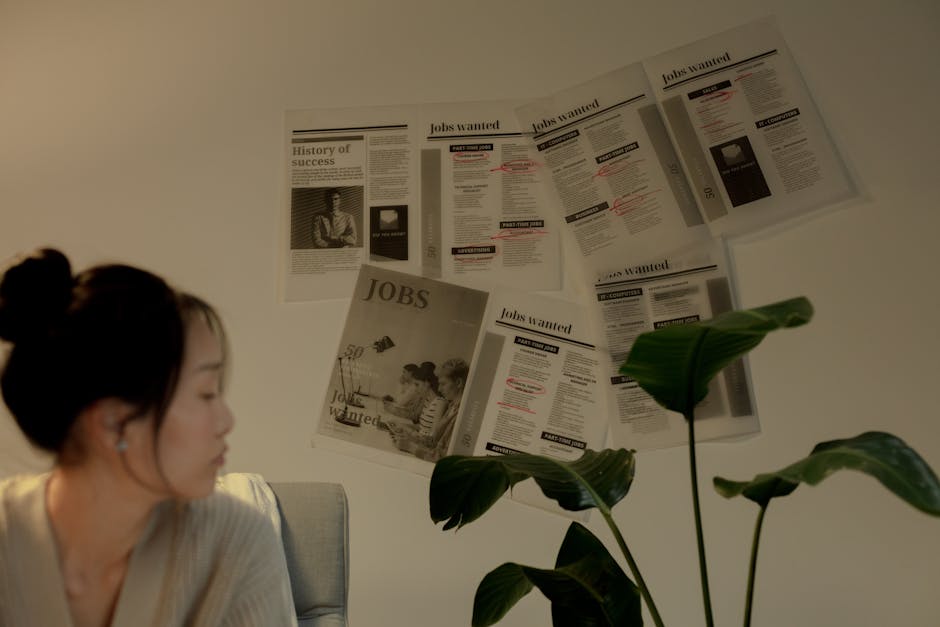
I wasted the better part of 2019 staring at a 13-inch MacBook screen in a coffee shop in Wicker Park, convinced I was ‘exploring my options.’ I had about $8,000 in savings, a degree that I wasn’t using, and the crushing realization that I could literally be anything. I could be a UX designer. I could get into technical sales. I could finally learn Python and pretend to be a developer. I could even go back to school for library science because, honestly, books don’t talk back.
I did none of those things. Instead, I spent fourteen months doing absolutely nothing. Choice is a trap.
We’re told that having options is the ultimate form of freedom, especially in ‘general’ roles where your skills are supposedly transferable. But for me, it felt like being stuck in a hallway with fifty doors, and because I was so terrified of picking the wrong one and wasting six months, I stayed in the hallway until I ran out of money. It was pathetic. I was thirty years old, eating discounted grocery store sushi, and ‘researching’ career paths like it was a full-time job. It wasn’t. It was just a high-end form of procrastination.
The LinkedIn lie and the ‘optimization’ rot
I know people will disagree with this, but I think LinkedIn is the single most destructive tool ever invented for anyone under the age of forty. It’s not just the cringe-inducing ‘humbled and honored’ posts. It’s the sheer volume of visible paths. You see a former coworker who was a mediocre marketing assistant suddenly become a ‘Head of Growth’ at a Series B startup, and you think, Wait, should I be doing growth? Then you see someone else move to Lisbon to become a freelance consultant, and you start Googling the tax implications of the NHR visa.
What I mean is—actually, let me put it differently. We aren’t looking for the best career; we’re looking for the one that won’t make us feel like we’re missing out on the other forty-nine. It’s an optimization problem that has no solution. You can’t optimize a life. You just live it. But we treat our careers like we’re trying to find the absolute lowest price on a pair of running shoes, checking every site, waiting for a coupon code that never comes. Meanwhile, the race has already started and we’re standing at the starting line in our socks.
The obsession with ‘finding the right fit’ is why you’re still in the same job you hated three years ago.
I genuinely believe that most ‘career coaches’ are just vultures feeding on this indecision. They tell you to ‘find your passion’ or ‘align with your values.’ That’s nonsense. Most of us don’t have a singular passion that pays a mortgage. We have things we’re okay at and things we hate. The goal isn’t to find the perfect overlap; the goal is to pick something that is 70% tolerable and then work at it until you’re good enough that people stop bothering you.
The 22-day itch (and some actual numbers)

I’m a bit of a nerd for tracking things, even when I’m failing. During my ‘gap year’ of indecision, I kept a spreadsheet of every career path I seriously considered. I tracked how long I could stay interested in a topic before the ‘paradox of choice’ kicked back in and I started looking at something else.
- Total paths considered: 14
- Average duration of interest: 22.4 days
- Money spent on ‘introductory courses’: $1,140
- Actual jobs applied for: 2
Twenty-two days. That was my limit. I’d buy a course on Udemy or Coursera (I’ll get to why I hate those in a second), get through the first three modules, feel a tiny bit of resistance, and then my brain would whisper, ‘Maybe this isn’t it. Maybe you’re actually a project manager.’ And just like that, I’d be back on Google, looking for the best PMP certification programs. It was a cycle of starting and stopping that resulted in zero forward momentum. I had the ‘breadth’ of a puddle and the depth of a pancake.
I hate Notion and I’m not sorry
This is a bit of a tangent, but I have to say it: I think tools like Notion have made this problem ten times worse. I see people spending weeks building these elaborate ‘career dashboards’ with databases and linked properties and aesthetic icons. It’s just another way to avoid doing the work. You aren’t building a career; you’re playing The Sims with your own life. I spent three days once just ‘organizing’ my thoughts on whether I should move into operations. Three days! I could have actually talked to three people in operations in that time. But no, I needed the perfect Kanban board first.
Anyway, I eventually deleted my Notion account and went back to a physical notebook. It’s harder to lie to yourself when you’re writing with a pen. You realize how stupid your ‘options’ look when they’re just scribbled on a piece of paper next to a grocery list.
The part where I might be wrong (but I don’t think I am)
I used to think that the ‘generalist’ was the future of work. I was completely wrong. Being a generalist is fine once you’re at the top, but when you’re trying to grow, being a generalist is just a polite way of saying you’re replaceable. If you can do ‘a bit of everything,’ you aren’t the person they call when things break. You’re the person they lay off when the budget gets tight because nobody is quite sure what it is you actually do all day.
I know people love the ‘T-shaped’ professional model, but I think it’s mostly a way for companies to trick you into doing three jobs for the price of one. I’ve found that the people who actually get paid—and more importantly, the people who have the most peace of mind—are the ones who picked a lane and stayed in it long enough to become slightly annoying to replace.
I might be wrong about this. Maybe there’s some magic ‘generalist’ role out there that pays $200k and involves ‘solving high-level problems’ while drinking lattes. But I haven’t seen it. Most of the generalists I know are just exhausted project managers who are also expected to do the copywriting and the data entry.
Pick a lane, even if it’s the wrong one
So, how did I get out of the hallway? I got desperate. My bank account hit $400, and the ‘paradox of choice’ suddenly vanished. When you can’t afford rent, you don’t care if you’re ‘aligned’ with your career path. You just need a paycheck.
I took a job in logistics. It wasn’t on my list of 14 paths. It wasn’t ‘cool.’ It didn’t have a flashy title. But it was a choice. And once I made that choice, something weird happened: the anxiety went away. I wasn’t worried about being a UX designer anymore because I was too busy figuring out how to move 40 tons of freight from Long Beach to Chicago.
A career is like a heavy cast-iron skillet; it takes forever to heat up, but once it’s hot, it actually cooks. If you keep moving the skillet from burner to burner because you can’t decide which one is ‘best,’ you’re never going to fry an egg.
My advice? It’s probably bad advice, but here it is: Stop researching. Stop ‘exploring.’ Just pick the thing that is right in front of you and do it for two years. If you hate it after two years, at least you’ll have a resume that shows you can actually finish something. That’s more than most people have.
I’m still in logistics. I don’t love it every day. Some days I still look at those ‘digital nomad’ posts and feel a twinge of jealousy. But I’m not in the hallway anymore. And that’s enough for now.
What are you actually avoiding by ‘keeping your options open’?