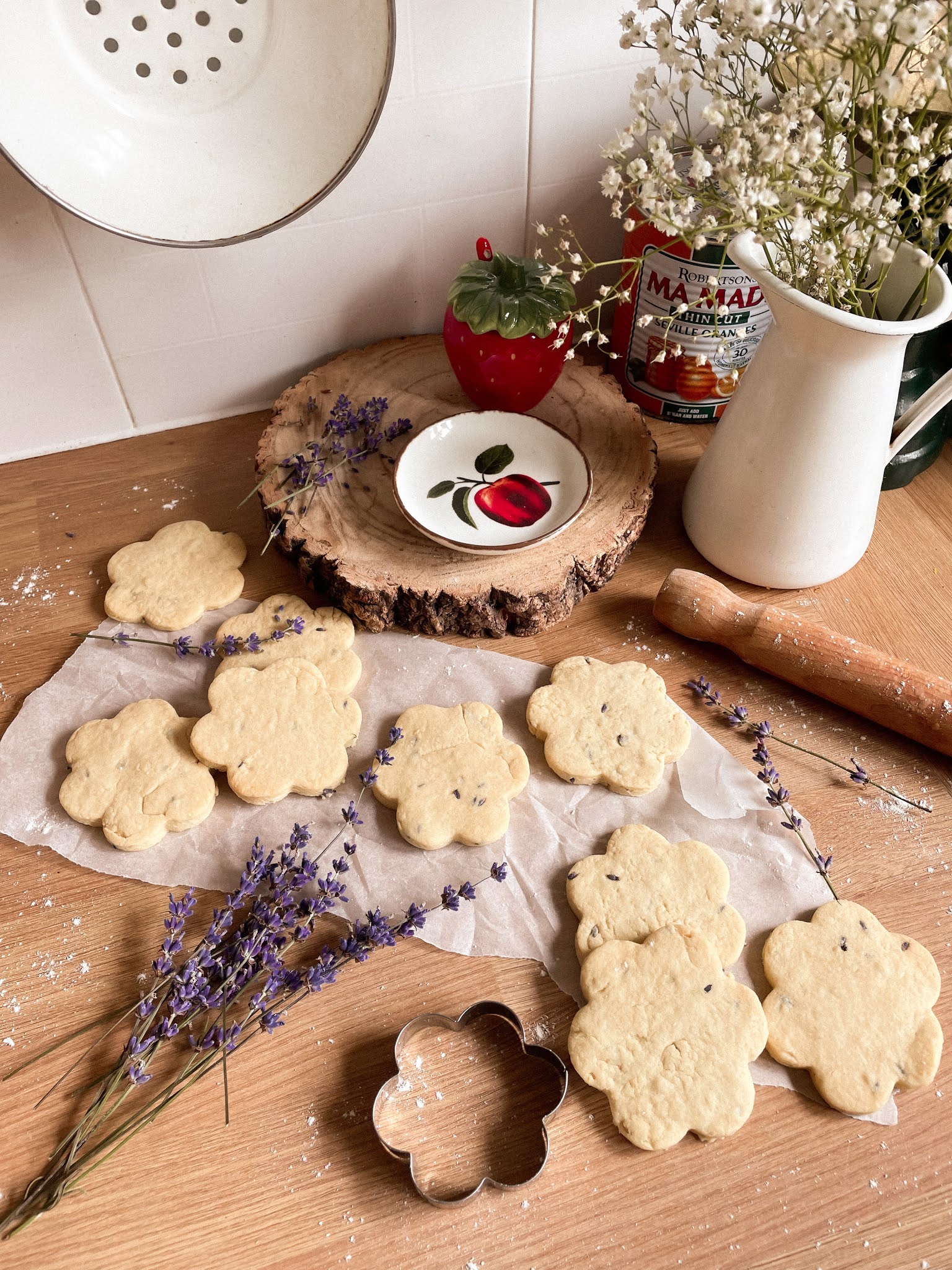
I spent three years making lavender shortbread that tasted like a soap factory exploded in my kitchen. The first batch was in a rented cottage in the Cotswolds — I used dried lavender from a decorative sachet. It was inedible. The second batch used lavender oil. Still terrible. The third batch? I finally asked a pastry chef in Edinburgh what I was doing wrong.
She told me three things: use culinary-grade lavender only, grind it with sugar, and never exceed 3g per 250g of flour. That was the turning point. This recipe is what I’ve settled on after maybe 40 batches. It works in a tiny campervan oven, a cottage Aga, or your home kitchen.
What Makes Lavender Shortbread Taste Like Soap (And How to Fix It)
Most lavender shortbread recipes fail because of one mistake: too much lavender, and the wrong kind. Dried lavender from a craft store or garden center is often treated with pesticides or coated in silica. It’s not food. Even culinary lavender needs careful handling — the essential oils that smell lovely in a sachet become overwhelming when baked.
The 3g Rule
For every 250g of plain flour, use exactly 3g of dried culinary lavender buds. Not 5g. Not a tablespoon. Weigh it. I use a $15 Escali kitchen scale that reads in 1g increments. If you don’t have a scale, it’s roughly 1.5 teaspoons, but volume measurements for dried herbs are unreliable because buds vary in size.
Grind It Into the Sugar
Don’t just stir lavender buds into the dough. Put the 3g of buds into a mortar with 50g of your caster sugar. Grind for about 60 seconds until the sugar turns pale green and smells floral but not cloying. This releases the oils evenly and prevents biting into a whole bud. No mortar? Use a rolling pin on a cutting board — crush the buds with the sugar, then sift through a fine-mesh strainer.
I ruined batch #7 by skipping this step. Whole lavender buds in shortbread are like chewing on pine needles. Don’t do it.
Which Lavender to Buy
I buy Mountain Rose Herbs culinary lavender ($6.50 for 1oz) or Frontier Co-op dried lavender buds ($5.99 for 1.2oz). Both are organic, food-safe, and consistent. Steer clear of bulk-bin lavender from health food stores — I’ve found batches that were 40% stems and dust. If you’re in the UK, Steenbergs organic lavender (£4.50 for 30g) is excellent. My local Waitrose stopped carrying culinary lavender entirely, so I order online.
The Exact Recipe: Lavender Shortbread Biscuits That Travel Well
This recipe makes about 24 biscuits. It’s adapted from the classic 3-2-1 shortbread ratio (300g flour : 200g butter : 100g sugar) with the lavender adjustment. These biscuits are sturdy enough to survive a week in a backpack without crumbling to dust — I’ve tested this on a train from London to Inverness and a flight to Reykjavik.
| Ingredient | Amount | Notes |
|---|---|---|
| Plain flour | 250g | Not self-raising. I use Waitrose essential plain flour ($1.20/lb) |
| Unsalted butter | 170g | Cold, cubed. I prefer Kerrygold ($3.50/block) — higher butterfat = better texture |
| Caster sugar | 85g | 50g for grinding with lavender, 35g reserved |
| Culinary lavender | 3g | Weighed, not guessed |
| Rice flour | 30g | Optional but recommended — gives that melt-in-mouth texture |
| Salt | ¼ tsp | Flaky sea salt if you have it (Maldon, $7.50) |
Method (20 minutes active, 30 minutes chill, 15 minutes bake)
- Grind 3g lavender with 50g caster sugar in a mortar for 60 seconds. Set aside.
- In a large bowl, rub 170g cold butter into 250g flour + 30g rice flour + ¼ tsp salt until it looks like coarse breadcrumbs. Use your fingertips — a food processor overworks the dough and makes tough biscuits.
- Add the lavender sugar. Mix gently. Add 1-2 tablespoons ice water if the dough won’t come together. It should just hold when squeezed.
- Pat into a disc, wrap in cling film, chill for 30 minutes. Don’t skip this — warm shortbread spreads into a flat, greasy mess.
- Preheat oven to 160°C (320°F). Roll dough to 1cm thick. Cut into rounds or rectangles. Place on parchment-lined tray, 2cm apart.
- Bake 14-16 minutes. Edges should be pale gold, not brown. Brown lavender shortbread tastes burnt and bitter.
- Cool on the tray for 5 minutes, then transfer to a wire rack. Dust with the reserved 35g caster sugar while still warm.
Three Common Failures (And How to Avoid Every One)
I’ve made every mistake in this recipe so you don’t have to. Here are the three that wrecked my early batches.
Failure #1: Using Dried Lavender From a Sachet
That pretty muslin bag of lavender you bought at a farmer’s market? It’s probably not food-grade. Decorative lavender is often treated with silica gel to preserve color and fragrance. Baking with it creates a chemical, soapy taste. One batch I made with sachet lavender was so bad I threw the whole tray in the bin. Only buy lavender labeled “culinary grade” or “food-grade” from a reputable supplier. If the package doesn’t say “food-safe” on it, don’t bake with it.
Failure #2: Overbaking
Shortbread continues to cook from residual heat after it comes out of the oven. Pull the tray when the edges are just starting to turn golden — about 14 minutes at 160°C. The center will look slightly pale and soft. That’s correct. If you wait until the whole biscuit is golden, you’ve overbaked it. Overbaked lavender shortbread loses its floral notes and tastes like plain burnt butter.
Failure #3: Warm Dough
Shortbread dough needs to be cold when it hits the oven. If your kitchen is above 24°C (75°F), the butter will soften too fast and the biscuits will spread into thin, greasy disks. I learned this the hard way baking in a French apartment in July — the biscuits merged into one giant, oily sheet. Solution: chill the cut biscuits on the tray for 10 minutes before baking. If the dough feels sticky at any point, refrigerate for 15 minutes.
When Not to Make Lavender Shortbread (And What to Make Instead)
Lavender shortbread isn’t for every situation. Here’s when I skip it.
High humidity environments. Shortbread absorbs moisture from the air. If you’re baking in a coastal town or during a rainy week, the biscuits will go soft within 24 hours. I made a batch in Cornwall in October and they were stale by morning. Instead, bake ginger snaps — they stay crisp longer. My go-to is the Stella Parks gingersnap recipe from BraveTart (uses 30g fresh ginger, 2 tsp cinnamon, and ¼ tsp black pepper). They travel better and don’t care about humidity.
When you need a gluten-free option. Shortbread relies on gluten structure for its crumbly texture. Substituting gluten-free flour blends gives a gritty, sandy result. I’ve tried King Arthur Measure for Measure flour ($6.99) and Bob’s Red Mill 1-to-1 ($5.49) — both produced biscuits that crumbled into powder on first bite. Instead, make lavender macarons (naturally gluten-free) or flourless lavender chocolate torte. The torte uses 200g dark chocolate, 150g butter, 4 eggs, and 2g lavender ground with 50g sugar — same floral flavor, no flour.
When you’re baking at altitude above 3000 feet. Shortbread recipes need adjustment — less butter, more flour, higher oven temp. I lived in Boulder, Colorado for a summer and my shortbread came out flat every time. The King Arthur high-altitude baking guide recommends reducing butter by 15% and increasing oven temperature by 25°F. Even then, lavender shortbread is finicky at altitude. I’d make lavender sugar cookies instead — they’re more forgiving.
How to Pack Lavender Shortbread for Travel (Without It Turning to Crumbs)
These biscuits survive a week in a backpack if you pack them right. I’ve taken them on trains, planes, and a 5-day hiking trip in the Lake District. Here’s the method.
Cool completely. Any residual warmth creates condensation inside the container. Wait at least 2 hours after baking. I leave them on a wire rack overnight if I’m packing the next morning.
Layer with wax paper, not parchment. Parchment is too slippery — biscuits slide around and knock into each other. Wax paper has enough grip to hold them in place. I use Reynolds Cut-Rite wax paper ($3.50 for 75 sq ft). Cut squares slightly larger than the biscuits and place one between each layer.
Use a rigid container with a tight seal. Ziploc bags crush shortbread into dust. I use a Lock & Lock 1.2L rectangular container ($8.99 at Target). It’s airtight, stackable, and fits perfectly in a backpack side pocket. For longer trips, I add a silica gel packet (the kind from shoe boxes) to absorb moisture. Works like a charm — biscuits stay crisp for 6 days.
Don’t store with apples or bananas. Ethylene gas from ripening fruit softens baked goods. I learned this when I packed shortbread in a bag with an apple for a train ride. By York, the biscuits were chewy. By Edinburgh, they were basically bread. Keep them in a separate compartment.
The single most important thing I’ve learned about lavender shortbread is this: grind the lavender into the sugar, weigh everything, and pull the tray at 14 minutes — everything else is just details.