Most “best co-working space in Bangkok” lists are written by people who spent one afternoon in Sukhumvit and took photos of a latte. That’s useless if you’re committing to a monthly membership. I’ve worked remotely from Bangkok across three separate stints totaling 14 months, and the spaces that looked great on Instagram were often the worst places to actually get work done. The reliable ones rarely trend on TikTok.
Here’s the core problem: Bangkok has over 150 co-working spaces, but fewer than 20 are built for serious long-term work. The rest are cafes with printer access. This guide gives you the exact checks to separate the two.
The Speed Test You Must Run Before Signing Anything
Don’t trust the marketing page. Every co-working space in Bangkok claims “high-speed fiber internet.” What they don’t tell you is that the connection gets shared across 80 people video-calling simultaneously during peak hours. The only way to know is to test it yourself at 2 PM on a Tuesday.
Bring your laptop, connect to the guest Wi-Fi, and run three tests: Speedtest.net, fast.com, and a real-world test like uploading a 500MB file to Google Drive. You want a minimum of 50 Mbps download and 20 Mbps upload with latency under 30ms for video calls. If upload speed drops below 10 Mbps, your Zoom calls will freeze. Period.
At Glowfish Sathorn, I consistently got 180 Mbps down and 95 Mbps up on a fiber line. At a popular spot near Asok BTS that I won’t name publicly, the “fiber” connection delivered 8 Mbps down at 3 PM. Same price point. Different universe.
Backup Power and Router Redundancy
Ask one question: “What happens to the internet when the building power flickers?” If the staff hesitates, walk out. Bangkok’s grid is stable in central areas, but construction-related outages happen. A reliable space has a UPS on the router and a backup LTE failover. True Digital Park on Sukhumvit 101 has dual fiber lines from different ISPs, which is the gold standard.
The AC Problem Nobody Mentions in Reviews
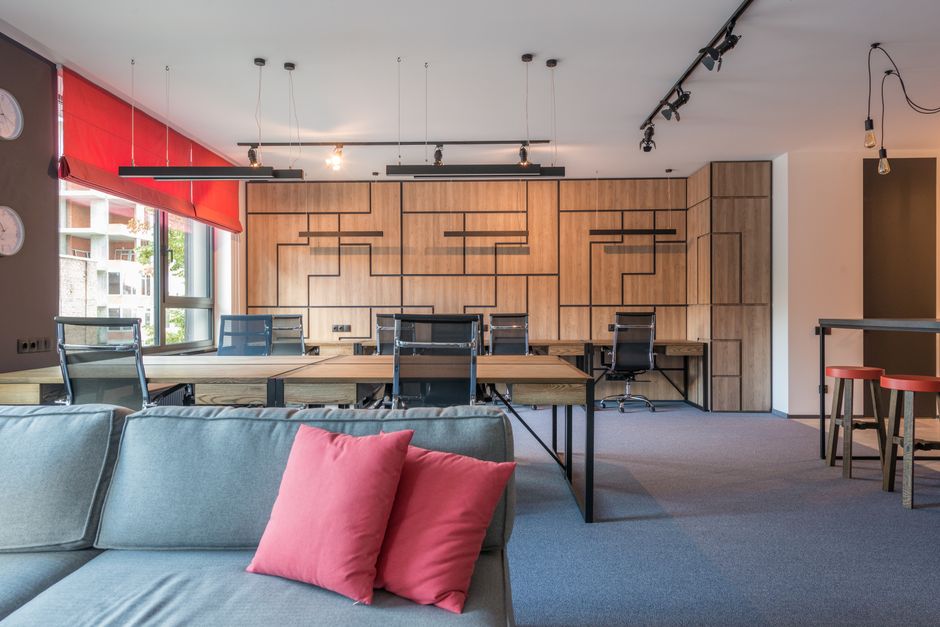
Bangkok co-working spaces overcompensate for the heat. Many set air conditioning to 18°C (64°F), which sounds great until you’re shivering through your third hour of focused work. The temperature swings between the hot BTS platform and the freezing workspace can trigger headaches, especially in your first month.
Bring a light layer even if it’s 35°C outside. The reliable spaces maintain 23-24°C consistently. The unreliable ones blast cold air from one vent and leave another corner stuffy. Check the ceiling: split-unit ACs create uneven zones. Central ducted air is better for consistent temperature.
This isn’t a comfort nitpick. If you can’t regulate your body temperature, your productivity drops measurably. I’ve left two spaces because of this alone.
Monthly Pricing: What You Actually Pay in 2026
Bangkok co-working pricing has bifurcated. Budget spaces cluster around 3,000-4,500 THB ($85-$130) per month for a hot desk. Mid-tier spaces run 5,000-8,000 THB ($140-$225). Premium spaces with dedicated desks and meeting room credits start at 9,000 THB ($255) and climb fast.
Here’s the pricing reality for long-term stays:
| Space | Monthly Hot Desk | Monthly Dedicated Desk | 24/7 Access | Meeting Room Credits |
|---|---|---|---|---|
| Glowfish Sathorn | 4,900 THB | 7,900 THB | Yes | 2 hours included |
| The Hive Thonglor | 5,500 THB | 9,500 THB | Yes | 4 hours included |
| JustCo AIA Sathorn Tower | 6,900 THB | 11,000 THB | Yes | 6 hours included |
| True Digital Park (East Bangkok) | 3,900 THB | 6,500 THB | No (7 AM-10 PM) | Pay per use |
| Hubba Thailand (multiple branches) | 3,200 THB | 5,500 THB | No | 2 hours included |
Bottom line: If you need 24/7 access because you work US or European hours, your realistic floor is 4,900 THB per month. Anything cheaper either lacks overnight access or packs you into a noisy room with no call booths.
Location Traps That Waste Two Hours Daily
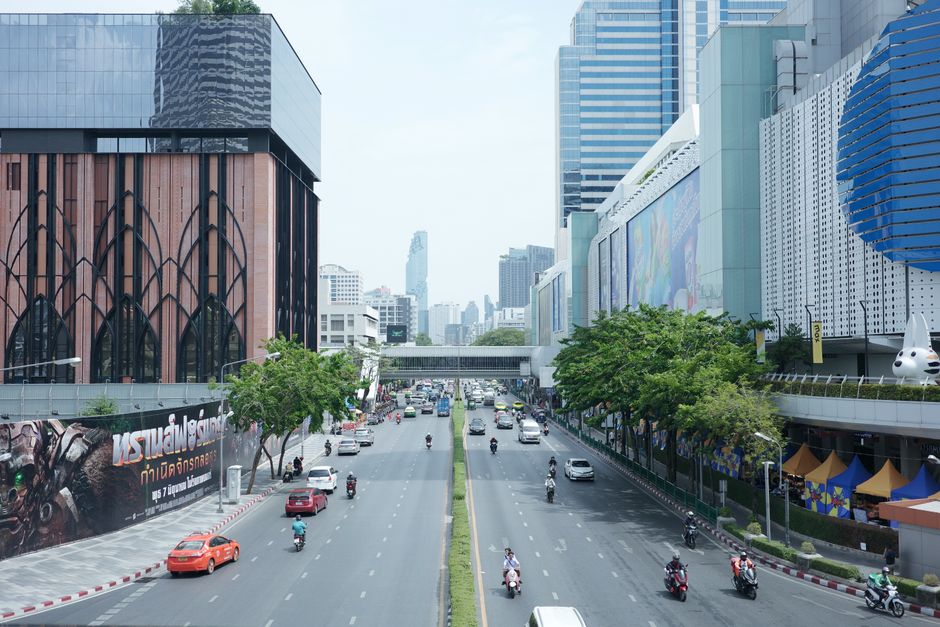
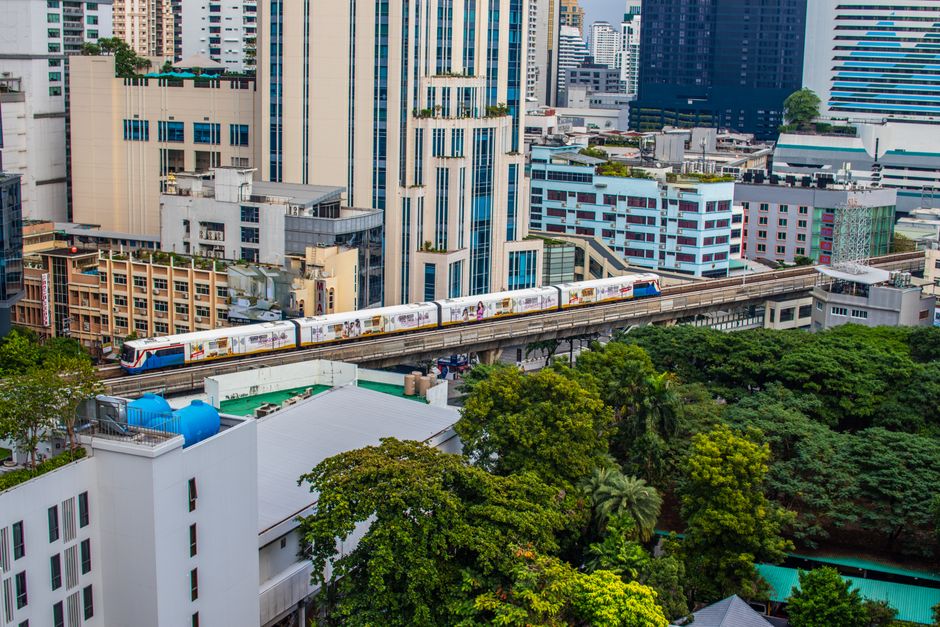
Bangkok traffic is not a joke. A co-working space that looks 4 km from your apartment can take 45 minutes by taxi during rush hour. The BTS and MRT are your lifelines. The only reliable rule: your co-working space should be within a 10-minute walk of a BTS or MRT station, or directly on a motorbike taxi route that costs under 40 THB.
The three most reliable clusters for long-term stays:
- Asok/Phrom Phong (Sukhumvit): Best density of quality spaces. The Hive Thonglor and JustCo at EmSphere are walkable from BTS. Highest rent but most options.
- Silom/Sathorn: Glowfish Sathorn and several JustCo locations. More corporate, fewer backpacker nomads. Better for focused work.
- Ari: Quieter, more local, cheaper food. Fewer big-brand spaces but Hubba Ari is solid and you’ll pay less for everything around it.
Avoid spaces in malls unless you need retail therapy. The foot traffic noise and the temptation to snack constantly will destroy your focus.
Call Booth Availability: The Silent Dealbreaker
You will take video calls. If the space has two call booths for 80 members, you will spend 20 minutes waiting for a booth before every meeting. That’s 20 minutes of anxiety you don’t need.
The ratio to look for: one call booth per 15-20 members minimum. Ask the front desk directly: “How many phone booths do you have, and how many active members?” If they dodge the member count, that’s your answer.
At The Hive Thonglor, I counted 6 phone booths across two floors with roughly 120 active members. That ratio worked. At a now-closed space in Ekkamai, there were 2 booths for 90 members. It failed.
Booth Quality Matters More Than Quantity
A phone booth without proper ventilation turns into a sweatbox after 10 minutes. Check for: a working exhaust fan, a small desk surface, a power outlet, and acoustic padding. If the booth is a glass box with no airflow, you’ll cut every call short.
When NOT to Commit to a Monthly Membership
Monthly memberships lock you in. If you’re in Bangkok for less than 3 weeks, buy day passes instead. Day passes run 300-600 THB ($8-$17). Five day passes per week at 400 THB average = 8,000 THB per month, which is more expensive than a monthly hot desk at most spaces. But if you’re only working 2-3 days per week from a co-working space, day passes win.
The break-even is roughly 12-14 days of use per month. Below that, day passes. Above that, monthly membership.
Also: if you’re staying near True Digital Park in East Bangkok, the commute to Sukhumvit spaces isn’t worth it. Work local. The BTS extension to Sukhumvit 101 makes this viable now.
One more failure mode to avoid: signing up for a 3-month prepaid plan to save 10%. If the space changes management, loses its lease, or you simply hate the vibe after week two, you’re stuck. Pay month-to-month for at least the first month at any new space.
The Verdict: What I’d Pick for a 6-Month Bangkok Stay
If I were landing at Suvarnabhumi tomorrow with a 6-month stay ahead, here’s my exact plan. First week: buy day passes at three spaces in the Asok/Phrom Phong cluster. Test the internet at 2 PM. Count the call booths. Sit in the AC for 3 hours. Then commit to a monthly membership at the one that passes all checks.
For most long-term remote workers, Glowfish Sathorn hits the sweet spot: 4,900 THB monthly hot desk, 24/7 access, consistent fiber speeds, and a member base that’s actually working, not networking. If you need more meeting room credits and don’t mind paying extra, The Hive Thonglor is the upgrade pick.
If you’re on a tight budget and don’t need overnight access, Hubba Thailand at 3,200 THB per month is the best value in the city. Just don’t expect premium furniture or quiet corners.
This is not financial advice, but it is practical advice from someone who has wasted money on bad co-working spaces so you don’t have to.