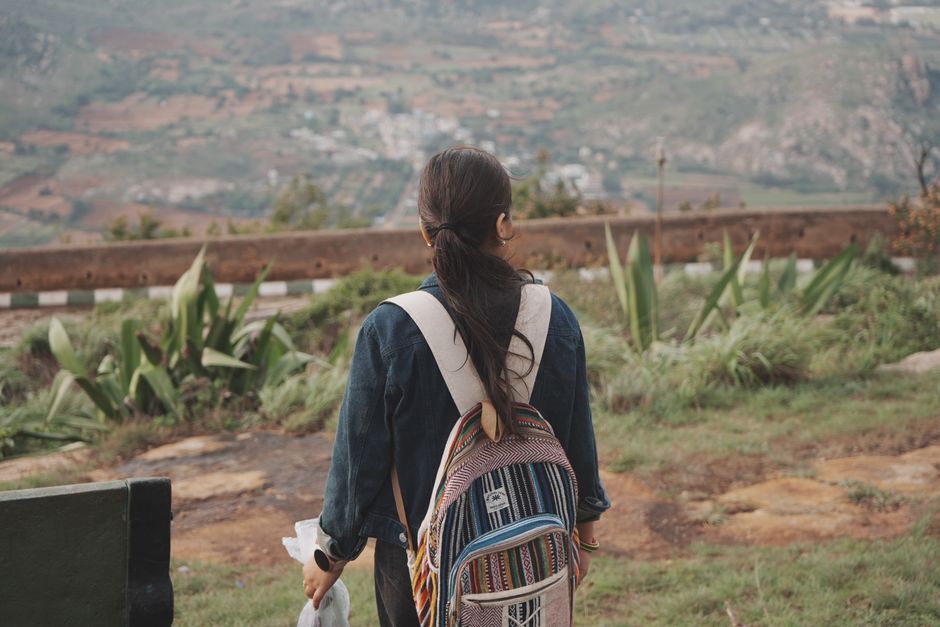
The biggest risk you face as a solo female traveler in Latin America isn’t cartels or kidnappings. It’s bad information. Most safety advice online is written by people who’ve never actually been, or by men who don’t understand the specific pressures women face. The real danger is getting so scared you never book the flight, or getting so careless you ignore the small, predictable mistakes.
I’ve spent the last four years traveling solo through Mexico, Colombia, Peru, and Argentina. I’ve been pickpocketed once (Bogotá, my fault), overcharged dozens of times, and helped by strangers more times than I can count. Here’s what actually matters for staying safe in 2026.
The Money Mistake That Gets Solo Women Targeted
Most travelers walk around flashing the wrong things. A thick wallet. A phone case with cards visible. A brand-name backpack in a market where the average daily wage is $15. You don’t need to look rich to be a target — you just need to look like an easier target than the person next to you.
Cash vs. Cards: The Real Tradeoff
Carrying a lot of cash is dangerous. But so is relying on a single Visa card that might get declined or cloned. The solution is a layered system:
- Primary card: A no-foreign-transaction-fee credit card (like the Chase Sapphire Preferred, $95 annual fee, 2x points on travel). Use this for hotels, nicer restaurants, and flights.
- Backup card: A travel-focused debit card from a bank like Charles Schwab (unlimited ATM fee rebates worldwide, no minimum balance). Use this only at bank ATMs inside buildings, never street ATMs.
- Emergency cash: $100 USD in small bills ($1s, $5s, $10s) hidden in your shoe or a fake shampoo bottle. This gets you a taxi to an embassy or a bus out of a bad situation.
Never hand your card to a waiter who walks away with it. In Latin America, card cloning is still common. Insist on a portable terminal brought to your table, or pay in cash at smaller places.
Why You Need a Separate Travel Card
If your main bank account gets compromised, you’re stuck. A prepaid travel card like the Wise card (formerly TransferWise) lets you hold money in 50+ currencies and freeze the card instantly from your phone. The fee is 0.41% per conversion, which beats most bank rates. I keep $200-300 on the Wise card for daily spending and transfer more only when needed.
Bottom line: Three layers — credit card for big purchases, debit card for ATM withdrawals, prepaid card for daily cash. If one gets stolen, you’re not stranded.
How to Handle Arrival Night (The Most Dangerous 12 Hours)
Statistically, the highest-risk period for solo female travelers is the first 12 hours after landing. You’re jet-lagged, disoriented, carrying all your valuables, and unfamiliar with the local scam patterns. Here’s how to neutralize that window.
| Scenario | What Not to Do | What Actually Works |
|---|---|---|
| Airport taxi | Hail a random driver outside arrivals | Book a registered taxi or Uber inside the airport terminal before exiting. In Mexico City, use the official “Taxi Autorizado” kiosk. Pay at the kiosk, not the driver. |
| SIM card | Buy from a booth in the arrivals hall (3x markup) | Buy an eSIM before you leave. Airalo offers a 7-day, 1GB Latin America regional eSIM for $9. You activate it before you board, so data works the second you land. |
| Accommodation | Arrive late and figure it out | Book your first two nights in advance. Choose a hostel or hotel with a 24-hour reception and a private room (not a dorm) for night one. You need sleep, not socializing. |
One specific trick: take a screenshot of your accommodation address and a map screenshot before you leave the airport. If your phone dies or you lose signal, you still have directions.
The Accommodation Safety Checklist Most Women Skip
A hostel with a 9.5 rating on Hostelworld might still have dodgy locks or a front desk that gives out room keys to anyone who asks. Here’s what I check before I book, and what I do when I arrive.
Booking Phase
- Filter for “female-only dorms” if you’re in a dorm. Many hostels in Latin America now have them (Selina hostels in Mexico and Colombia do).
- Read the reviews for safety keywords: “felt safe,” “secure entry,” “locker.” Avoid places with reviews mentioning “sketchy area” or “broken lock.”
- Check the location on Google Street View. Is the street well-lit? Is there a 24-hour convenience store nearby? A 10-minute walk from a metro station through unlit streets at 10 PM is a hard no.
Arrival Phase
- Test the door lock immediately. If it’s a key lock, does it work? If it’s an electronic keypad, change the code if possible.
- Identify two exits from your room and from the building. Fires happen. So do earthquakes in places like Mexico City and Lima.
- Never tell the front desk your exact room number out loud. Say “room 302” when you’re in 305. Paranoia is free.
My pick for solo female travelers: The Viajero hostels in Colombia have a consistently high safety standard — 24-hour reception, lockers that fit a 40L backpack, and female-only floors in most locations. They’re not the cheapest ($15-25/night for a dorm), but the safety margin is worth the extra $5.
Phone and Data Security on the Road (eSIMs, VPNs, and Backup)
Your phone is your map, your translator, your bank, and your emergency contact. If it gets stolen, you lose all of that. The solution isn’t a cheap phone — it’s a smart data setup.
Why You Need an eSIM, Not a Physical SIM
A physical SIM card can be pulled out and discarded by a thief. An eSIM is embedded in your phone and can’t be removed without your passcode. For 2026 travel in Latin America, the best option is Airalo’s regional Latin America eSIM ($19 for 30 days, 3GB). It covers 18 countries, so you don’t need to swap SIMs at every border. Activation takes 2 minutes. No store visit needed.
The alternative is Holafly, which offers unlimited data plans for specific countries (Mexico unlimited 15 days for $27). Both work with iPhone XS and newer, and most Android flagships from 2026 onward.
VPN: Not Optional Anymore
Public Wi-Fi in hostels, cafes, and airports in Latin America is often unencrypted. A VPN encrypts all your traffic, so even if someone on the same network is sniffing packets, they can’t read your bank login. ProtonVPN has a free tier with no data limits (but slower speeds). For $4.99/month, Mullvad VPN is the gold standard — no logs, no personal info required, accepts cash payments. I use Mullvad on every trip. It costs less than one overpriced airport coffee.
What to Do When Something Goes Wrong (Because It Sometimes Will)
No amount of preparation prevents every problem. Your phone gets snatched. You miss the last bus. A guy follows you down the street. Having a plan for those moments is what separates a bad story from a disaster.
Phone Snatch Recovery Protocol
- Don’t chase the thief. Your phone is not worth your life.
- Use Find My iPhone or Google Find My Device from a laptop or friend’s phone. Put it in Lost Mode immediately.
- Call your bank and freeze your cards. If you used a prepaid card, freeze that too.
- Go to your country’s embassy or consulate. They can issue an emergency passport and help with communication. Keep the embassy address and phone number in your notebook (not just your phone).
- Buy a cheap burner phone from a local electronics market (in Mexico, the Mercado de Tecnología in Mexico City sells used iPhones for $80-120). Install WhatsApp and your eSIM profile, and you’re back online.
The “Friendly Local” Scam
This is the most common scam targeting solo women. A seemingly helpful local approaches you, offers directions or a recommendation, then leads you to a bar or restaurant where you’re presented with an inflated bill. The drink you ordered costs $5? The bill says $50, and intimidating staff block the exit.
How to avoid it: never follow a stranger to a second location. If someone offers help, accept it verbally, but don’t walk with them. Say “I’m meeting a friend right here” and stay put. If they persist, walk into the nearest busy shop or restaurant and tell the staff you’re being followed.
When NOT to Travel Solo (Honest Advice)
I’m not going to tell you every place is safe if you’re just smart enough. Some destinations in Latin America are genuinely high-risk for solo women right now, and pretending otherwise is irresponsible.
Places I’d avoid solo in 2026:
- Northern Mexico border cities: Tijuana, Ciudad Juárez, Nuevo Laredo. Cartel violence is active and unpredictable. Not worth it.
- Parts of Venezuela: The economic collapse has created widespread insecurity. Unless you have a specific reason and local contacts, skip it.
- Some rural areas in Honduras and El Salvador: Gang-controlled territories where a solo woman draws immediate attention. Stick to tourist corridors like Copán Ruinas in Honduras or Ruta de las Flores in El Salvador.
Places that are safer than most people think:
- Buenos Aires, Argentina: European-level infrastructure, excellent public transport, and a strong cafe culture where solo women are completely normal. The biggest risk is pickpocketing on the Subte (subway).
- Medellín, Colombia: The transformation is real. The metro is safe, the neighborhoods of El Poblado and Laureles are full of solo travelers and digital nomads. Avoid Centro at night and you’ll be fine.
- Oaxaca City, Mexico: One of the safest cities in Mexico for solo women. Walkable, friendly, and full of female-run hostels and tours.
The truth is that most of Latin America is safer for solo women than the news makes it seem. The risks are real but predictable. Pickpocketing, overcharging, and the occasional scam are the main threats — not cartels. Treat your safety like you treat your budget: plan ahead, keep reserves, and trust your instincts when something feels wrong. You’ll be fine.